School Timings: 9.00 AM - 2.00 PM

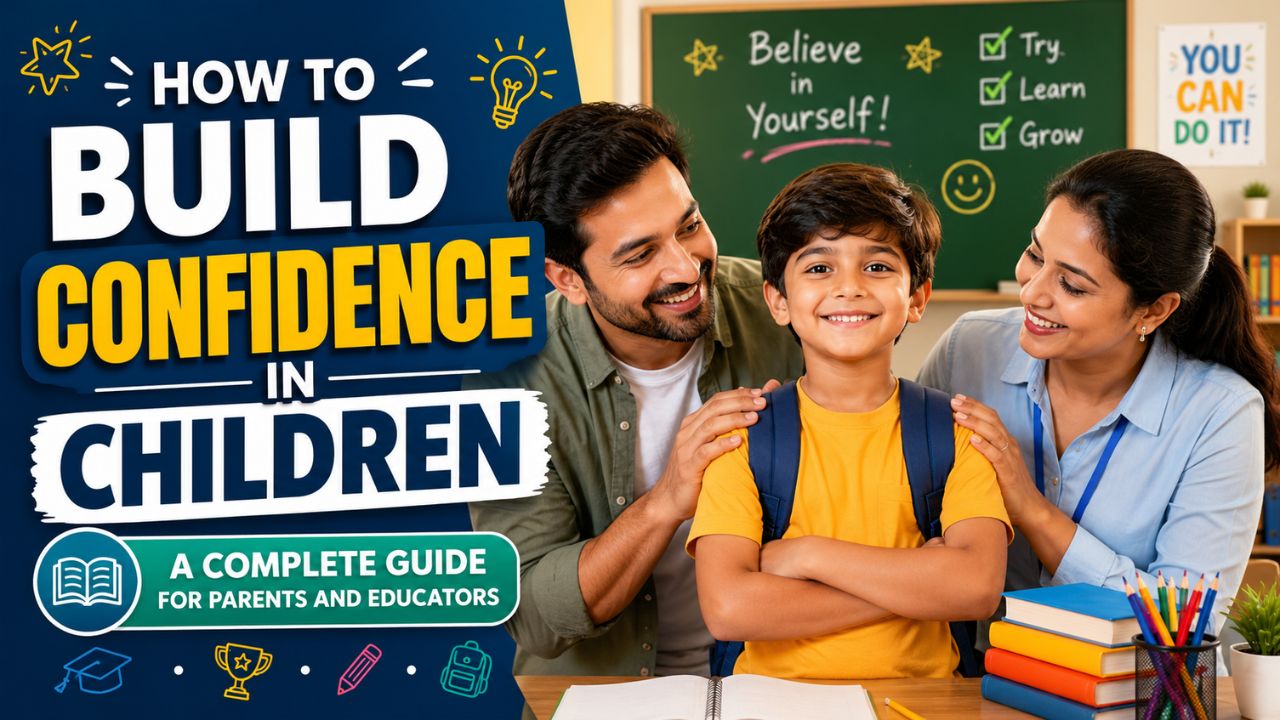
Every parent wants to see their child grow into a confident, happy, and independent individual. Confidence isn't something children are simply born with—it's built over time through everyday experiences, encouragement, and the support they receive from the people around them.
A confident child is more likely to ask questions, share ideas, try new things, and bounce back after setbacks. They feel comfortable expressing themselves, develop stronger relationships, and approach challenges with a positive mindset. These qualities not only help them perform better in school but also prepare them to navigate life's ups and downs with resilience.
The encouraging news is that confidence can be nurtured. With consistent guidance from parents, teachers, and caregivers, children gradually learn to believe in their abilities, take responsibility for their actions, and become more willing to step outside their comfort zone. Simple everyday experiences—such as solving a problem independently, making small decisions, or being appreciated for their effort—can have a lasting impact on how they see themselves.
At Hera Public School, we believe that education extends far beyond textbooks and examinations. Academic excellence is important, but so is developing emotional strength, leadership qualities, creativity, communication skills, and a sense of responsibility. When children feel supported in every aspect of their development, they become more self-assured, compassionate, and prepared for the future.
Confidence in children is the belief that they can learn, grow, make their own decisions, and handle everyday challenges. It doesn't mean they never feel nervous or afraid. Every child experiences fear at times, but a confident child is willing to face those fears and give things a try instead of letting them hold them back.
Children with self-belief trust that they can complete tasks, learn new skills, and improve through practice.
Resilience is the ability to recover from mistakes, disappointment, or failure without seeing one setback as proof of inability.
Social confidence helps children express thoughts openly, join group activities, communicate with classmates, and form healthy relationships.
Giving children the chance to make age-appropriate choices helps them develop a sense of responsibility and confidence. Even simple decisions, like choosing what to wear or which book to read, can encourage independence and help them trust their own judgment.
Confident children don't just do well in school—they're also more curious, adaptable, empathetic, and open to trying new things. Every child is different, so building confidence starts with understanding their unique personality instead of expecting them all to think, learn, or behave the same way.
 Parent encouraging home learning to build confidence in children
Praise is most effective when it focuses on effort, persistence, and improvement rather than only on talent or results.
Instead of saying, “You’re so smart,” say, “I’m proud of how patiently you worked through that problem.”
This teaches children that abilities can grow through practice. It also reduces the fear of making mistakes because children learn to value the process, not only the result. Parents and teachers can learn more about using effort-focused praise through the American Psychological Association’s guidance on praise and student resilience.
Give children the freedom to make simple, age-appropriate decisions, whether it's choosing what to wear, packing their school bag, picking a book to read, or arranging their study space. These everyday choices help them become more independent, take responsibility for their actions, and build confidence in their own abilities.
Children often learn more from what they see than from what they're told. When parents stay calm during challenges, speak respectfully, admit their mistakes, and try again after setbacks, they set a powerful example of confidence and resilience. Over time, children begin to adopt these same attitudes in their own lives.
Children feel more confident when they know they can share their thoughts, worries, questions, and feelings without being judged. Creating a safe and supportive environment where they feel heard encourages them to express themselves openly.
Active listening isn't just about hearing what a child says—it's about giving them your full attention, understanding their feelings, and responding with patience and empathy. When children feel that their thoughts and emotions truly matter, their confidence naturally grows.
Avoid comparing your child with siblings, classmates, or other children. Every child grows, learns, and develops at their own pace, with their own unique strengths and abilities. Instead of focusing on how they measure up to others, celebrate their individual progress and encourage them to become a better version of themselves.
Age-appropriate responsibilities such as watering plants, organising books, setting the table, or helping with simple household tasks teach children that they are useful and trusted.
 Indian student participating in class to build confidence in children
A supportive school environment encourages children to speak up, take part in activities, and try new things without worrying about making mistakes or feeling embarrassed. When students feel respected, valued, and supported, they're more likely to develop the confidence they need to learn, grow, and reach their full potential.
Teachers can encourage questions, appreciate effort, offer constructive feedback, and treat mistakes as part of learning. Students should not be mocked for an incorrect answer. Instead, they should be guided towards the right solution.
Excessive comparison between students may make some children feel inferior. Teachers should recognise personal improvement and encourage realistic progress.
Classroom responsibilities, clubs, student councils, assemblies, group presentations, and event management give children practical opportunities to take initiative.
Group projects and team activities build communication, empathy, adaptability, and problem-solving skills. Teachers should ensure that every child gets a chance to participate.
Not every child will shine in the same area. Some may be strong in mathematics, while others may excel in art, sports, music, writing, technology, or leadership.
At Hera Public School, learning modules and extracurricular opportunities help students explore different interests and discover their strengths. This balanced approach supports confidence in academics, arts, sports, communication, and personal development.
Help children set realistic and specific goals. A large goal can be divided into smaller steps.
Instead of saying, “Improve your English,” set a goal such as, “Read one short story this week and learn five new words.”
Encourage children to tackle age-appropriate challenges. Avoid giving immediate answers every time. Ask, “What have you tried so far?” or “What other option could work?”
This approach teaches children to think independently and trust their reasoning.
Children sometimes say, “I cannot do this,” or “Everyone is better than me.”
Teach them to replace negative thoughts with constructive statements such as “I cannot do it yet,” “I can improve with practice,” and “I can ask for help.”
Children need opportunities to make small mistakes in a safe environment. If adults prevent every failure, children may become afraid to act without help.
Participation in arts, sports, science activities, reading, coding, music, gardening, or public speaking allows children to discover talents and preferences.
When children become skilled in an area they enjoy, their confidence often improves in other areas as well. Practised consistently, these strategies show parents how to build confidence in children and prepare them to handle academic, emotional, and social challenges independently.
 Extracurricular activities showing how to build confidence in children
Extracurricular activities provide opportunities to learn outside textbooks and examinations.
Sports encourage teamwork, discipline, perseverance, coordination, and physical fitness. Children learn how to win with humility and lose without giving up.
Art and music promote creativity, self-expression, patience, and problem-solving. They also give children a way to communicate emotions.
Speaking in front of others improves communication and reduces the fear of expressing ideas. Children can begin with short classroom introductions before moving to speeches or debates.
Helping others builds empathy, responsibility, gratitude, and a sense of purpose.
Science, literature, sports, environmental, technology, and cultural clubs allow students to work with peers who share similar interests.
Extracurricular activities build confidence in children by helping them discover abilities that may not always be visible in a traditional classroom.
Teach children that mistakes are learning opportunities. Avoid reacting harshly to poor performance. Discuss what happened, what the child learned, and what can be done differently next time.
Maintain open communication so children feel comfortable reporting difficult situations. Parents and teachers should coordinate quickly when bullying or exclusion affects a child’s confidence.
Children should be taught how to say no, seek help, and stay close to supportive peers.
Focus on strengths, effort, improvement, and positive qualities. Avoid sarcasm and labels such as “lazy,” “weak,” or “careless.”
Correct the behaviour without attacking the child’s identity. Say, “Your homework is incomplete,” rather than, “You are irresponsible.”
Emphasise learning and growth rather than only grades. Encourage a balanced routine that includes rest, play, physical activity, hobbies, and family time.
Do not force a shy child into overwhelming situations. Begin with small steps, such as greeting one person, answering one question, or participating in a small group.
Progress may be gradual, and that is acceptable. Patience can build confidence in children without making them feel pressured or judged.
Practise situations such as introducing oneself, asking a teacher for help, responding to teasing, or speaking to a new classmate.
Recognise effort, kindness, responsibility, courage, and improvement. Achievements do not need to be large to be meaningful.
Age-appropriate household tasks teach independence and reliability. Children feel proud when adults trust them with real responsibilities.
Encourage children to write about what they learned, what was difficult, and what they handled well.
Support questions and exploration in schoolwork, hobbies, nature, technology, and everyday life.
Confidence and self-belief go hand in hand. When children believe they can achieve a goal through their own efforts, they're more likely to take on challenges instead of avoiding them. This sense of self-belief encourages them to keep trying, even when something feels difficult or doesn't work out the first time.
Confident children are generally more willing to solve problems, ask questions, and stick with a task until they find a solution. They also tend to express their ideas more clearly, work well with others, and feel more comfortable in social situations.
A supportive environment makes a big difference. When children know they have caring adults who encourage them and help them learn from setbacks, they're better able to manage stress and bounce back from disappointments. As highlighted in the Harvard Center on the Developing Child's resilience guide, strong relationships and resilience are key building blocks for a child's long-term growth and overall well-being.
Confidence and Emotional Intelligence
Emotional intelligence plays an important role in helping children understand their emotions, cope with stress, communicate respectfully, and build positive relationships with others. These skills make it easier for them to handle everyday situations with confidence and empathy.
Children can gradually learn healthy ways to deal with difficult emotions, such as taking deep breaths, asking for help when they need it, taking a short break, or talking about how they feel. For example, a child who can say, "I felt left out," is much more likely to get the support they need and work through the situation in a positive way.
Parent-School Collaboration
Work Together with Your Child's School
Children benefit the most when parents and teachers stay connected. Regular communication about a child's strengths, learning style, behaviour, and any confidence-related concerns helps create a supportive environment both at home and at school.
Keep an Eye on Their Progress
Pay attention to changes in your child's behaviour, participation, mood, academic performance, or interest in daily activities. Noticing these signs early makes it easier to provide the right support before small challenges become bigger ones.
Parent workshops, mentoring sessions, counselling services, and school events can offer valuable insights and practical ways to support your child's growth. They also help parents better understand their child's emotional and developmental needs.
When parents and educators work together with a shared goal, children receive consistent support wherever they are. This strong partnership plays a key role in helping them build confidence, overcome challenges, and grow into capable, independent individuals.
Focus on improvement rather than flawless performance. Perfectionism can make children afraid to begin or try something new.
Allow children to explore new activities safely, even when success is not guaranteed. Trying something unfamiliar is itself an achievement.
Offer support without taking control. Ask questions, provide options, and allow the child to make age-appropriate choices.
Children should understand that love and respect are not dependent on grades, medals, or achievements. This emotional security allows them to take healthy risks and recover from setbacks.
Parents and teachers may notice that children become more willing to try new activities, express ideas openly, use positive self-talk, take responsibility for mistakes, ask for help appropriately, and respond better to constructive feedback.
Building confidence in children is a journey that parents, teachers, and schools take together. When children receive the right guidance at home, support in the classroom, and opportunities to make their own decisions, they gradually develop self-esteem, resilience, communication skills, and the confidence to solve problems on their own.
True confidence isn't built through constant praise or by shielding children from every challenge. It grows when they feel safe to try, know it's okay to make mistakes, and are encouraged to keep going even when things don't work out the first time.
At Hera Public School, we believe confidence comes from a well-rounded education. Along with strong academics, we focus on leadership, emotional intelligence, sports, creativity, communication, and extracurricular activities. These experiences help students discover their strengths, participate with confidence, and grow into responsible, capable, and future-ready individuals.
Want to know more about how we help children build confidence? Visit Hera Public School and explore our programs designed to support every child's overall growth.
