School Timings: 9.00 AM - 2.00 PM

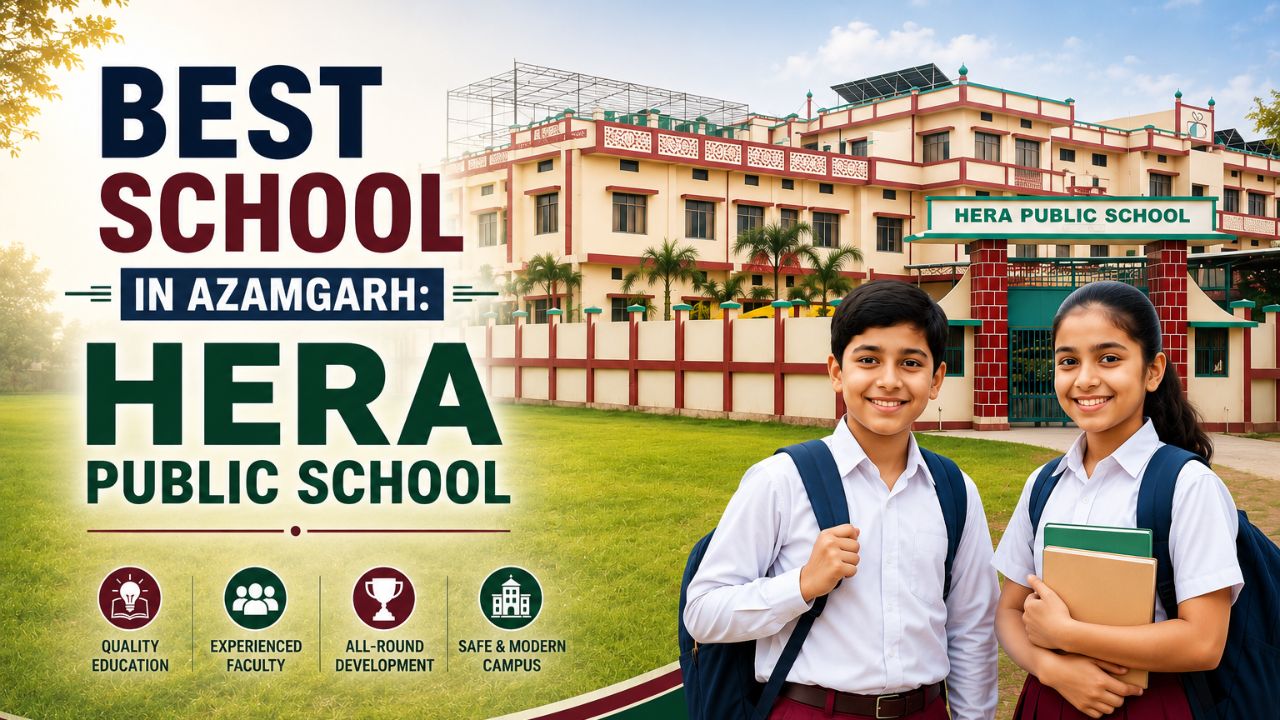
Choosing a school is one of the biggest decisions parents make for their child. A school does much more than teach subjects like Maths, Science, English, and Social Studies. It helps shape a child's personality, confidence, discipline, values, communication skills, and overall approach to life.
That is why parents searching for the best school in Azamgarh look beyond attractive advertisements or high exam scores. They want a school where teachers genuinely care about every student, children receive personal attention, discipline is balanced with encouragement, and learning goes beyond textbooks.
Hera Public School believes in providing exactly this kind of environment. Located in Phadgudia, Azamgarh, the school focuses not only on academic excellence but also on building confidence, strong values, responsibility, physical fitness, and social awareness. Its vision is to provide quality education to every child while promoting equality, inclusiveness, and opportunities for students from rural and economically weaker backgrounds.
For parents who want their children to grow into confident, responsible, and capable individuals, Hera Public School offers a supportive environment where learning extends far beyond the classroom.
 Students at Hera Public School, one of the best school in Azamgarh for holistic education
Every family has different expectations from a school. Some parents focus on academic results, while others prioritise discipline, safety, communication, sports, or personal attention.
However, the right school should not force parents to choose between academic success and overall development. It should provide both.
A good school should offer:
Clear and structured academic learning
Supportive and knowledgeable teachers
Regular assessment and constructive feedback
A safe and organised learning environment
Opportunities in sports and extracurricular activities
Strong communication between parents and teachers
Character building and value-based education
Space for creativity, communication, and independent thinking
Guidance for students who need additional support
Children spend a significant part of their formative years at school. During this time, they learn much more than what is written in their textbooks.
They learn how to communicate, cooperate, manage time, handle disagreements, respond to failure, and take responsibility for their choices. These experiences eventually shape the kind of adults they become.
For this reason, the best school in Azamgarh should prepare students not only for the next examination but also for the responsibilities and opportunities that lie ahead.
Good marks are important because they show how well a student understands a subject. They help teachers identify strengths, recognise areas that need improvement, and track a child's academic progress.
But a report card doesn't tell the whole story.
A student who scores well in exams may still struggle to speak confidently in front of a class. Another child might be exceptionally creative, curious, or talented in sports but need a little extra help with mathematics or languages. Every child has different strengths, and a good school understands that.
At Hera Public School, learning is about much more than finishing the syllabus. Students are encouraged to ask questions, take part in discussions, work on projects, think independently, and learn through real-life experiences.
For example, a child may memorise a science definition for an exam, but watching or performing a simple experiment often makes the concept much easier to understand and remember. In the same way, reading about teamwork is one thing, but working together on a group project teaches children how to communicate, cooperate, and solve problems as a team.
This balance between classroom learning and practical experiences helps students develop skills that go far beyond exams. Instead of simply memorising information, they learn to think critically, apply their knowledge, and approach challenges with confidence.
A Comfortable and Encouraging Learning Environment
 Interactive classroom learning at the best school in Azamgarh, Hera Public School
Children learn best when they feel comfortable asking questions and sharing their ideas. A positive classroom isn't one where students are afraid of making mistakes—it's one where they are encouraged to think, explore, and learn from every experience.
When children worry about being criticised for giving the wrong answer, they often stop participating. Over time, they may hesitate to ask questions or share their thoughts, even when they are curious or have something valuable to contribute.
This is where supportive teachers make a real difference. When students know their questions will be heard and their efforts appreciated, they become more confident in the classroom. They are willing to take on challenges, join discussions, and express themselves without fear.
At Hera Public School, teachers strive to create a learning environment that balances discipline with encouragement. Rules and structure are important, but they are designed to help students learn, grow, and develop confidence rather than feel intimidated.
For parents, this matters just as much as academic performance. A child who feels safe, respected, and supported at school is more likely to enjoy learning, attend regularly, stay focused in class, and perform better over time. When children are emotionally comfortable, they become more confident learners—and that confidence stays with them well beyond the classroom.
Building Strong Academic Foundations
Strong academic foundations are essential for a child’s future.
The concepts students learn during their school years influence their ability to understand advanced subjects, prepare for competitive examinations, pursue higher education, and make informed decisions in everyday life.
Students need clarity in mathematics, science, languages, social studies, and other subjects. However, genuine understanding cannot be built through memorisation alone.
For example, memorising a mathematical formula may help a child solve a familiar question. Understanding why the formula works helps the student solve unfamiliar problems as well.
The same principle applies to science, languages, and social studies. Lessons become more meaningful when teachers connect them with practical examples, classroom activities, discussion, and everyday situations.
Hera Public School aims to support academic development through structured lessons, regular written practice, revision, assessment, and teacher feedback.
This approach also helps teachers identify learning gaps early. When a child does not understand a basic concept, the difficulty can increase in higher classes. Timely guidance prevents a small confusion from becoming a larger academic problem.
For parents searching for the best school in Azamgarh, the quality and consistency of academic support should remain an important consideration.
No two children learn in exactly the same way.
Some students understand a lesson by reading it. Others learn more effectively through examples, diagrams, demonstrations, repetition, or discussion.
Some children ask questions immediately. Others remain silent even when they are confused.
A good teacher learns to notice these differences.
Teachers do much more than deliver lessons. They observe how students respond, identify where they are struggling, encourage participation, and help children develop better study habits.
The relationship between a teacher and a student can also shape how the child feels about a subject.
A student who finds mathematics difficult may begin to enjoy it when a teacher explains it patiently. A child who hesitates to speak may become more confident after receiving encouragement during a classroom presentation.
Children often remember the teachers who believed in them, particularly during moments when they were struggling.
At Hera Public School, teachers are expected to play the role of guides and mentors. Their responsibility is not only to complete the syllabus but also to help students understand, participate, and improve.
This supportive teacher-student interaction can make learning more meaningful and less stressful.
Textbooks provide an important structure for learning, but children also need opportunities to use what they have learned.
Projects, experiments, storytelling, debates, quizzes, art, cultural activities, presentations, and group assignments make the learning process more engaging.
For instance, a group project teaches more than the subject itself. Students learn how to divide responsibilities, listen to different opinions, manage time, and work towards a shared goal.
A science activity can turn an abstract concept into something visible and understandable. A debate encourages students to research, organise their thoughts, and listen respectfully to an opposing viewpoint.
The Government of India’s Samagra Shiksha programme also promotes a holistic approach to school education. Its initiatives highlight equal learning opportunities, sports, experiential learning, reading habits, inclusion, school safety, and the development of life skills. (Samagra Education)
Hera Public School’s focus on learning beyond examinations supports this wider understanding of education.
Children should not remain passive recipients of information. They should be active participants who explore, question, create, and communicate.
Such experiences help students discover interests and abilities that may not always be visible in written examinations.
Confidence isn't built by simply telling a child to be confident—it grows through experience. A child may start by answering a question in class, then progress to reading aloud, participating in group activities, or speaking at a school event. Every small achievement helps build self-belief.
Schools play an important role in creating these opportunities. Not every child enjoys being on stage, and that's perfectly okay. Some express themselves through public speaking, while others shine in writing, art, sports, science activities, or leadership roles. The goal is to help every student grow beyond their comfort zone at their own pace.
At Hera Public School, students are encouraged to take part in activities that help them become more confident, responsible, and expressive.
Confidence influences almost every aspect of a child's future. Students who believe in themselves are more likely to ask questions, share their ideas, take initiative, participate in activities, and handle challenges with a positive attitude.
For parents looking for the best school in Azamgarh, a school's ability to build confidence is just as important as its academic performance.
Discipline is an essential part of every school's learning environment. Students should understand the importance of being punctual, attending regularly, wearing the proper uniform, behaving respectfully, keeping their surroundings clean, and completing their work on time.
But good discipline is about more than following rules—it is about understanding why those rules matter. Being punctual teaches respect for time, completing homework builds consistency, keeping classrooms clean encourages responsibility, and listening to others helps develop patience and respect.
At Hera Public School, discipline is seen as a way to build positive habits rather than simply enforce rules. The focus is on helping students develop self-discipline, understand the consequences of their choices, and make responsible decisions on their own.
These values stay with children long after they leave school, helping them succeed in higher education, their careers, and everyday life.
Academic education is incomplete if it doesn't help children grow into honest, respectful, and responsible individuals. Values aren't developed through a single lesson—they are shaped by everyday experiences at school.
Children learn by observing how teachers interact with students, how conflicts are resolved, how mistakes are handled, and how people from different backgrounds are treated. A positive school environment encourages values such as honesty, respect, compassion, responsibility, fairness, and service to others.
Students should gradually learn to:
Take responsibility for their actions
Speak honestly
Respect parents, teachers, and classmates
Help those who need support
Care for shared spaces and the environment
Use time and resources responsibly
Listen to different viewpoints
Contribute positively to society
At Hera Public School, education is closely connected with strong values, equal opportunities, community upliftment, responsibility, and service to society. In today's digital world, where children are influenced by information from many sources, these values help them make thoughtful decisions and grow into responsible individuals.
 Students developing teamwork and confidence through sports at Hera Public School Azamgarh
Children need movement as much as they need academic learning.
Long hours of sitting, studying, and using digital devices can affect physical health, concentration, sleep, and emotional well-being.
Sports and physical activities give students an opportunity to remain active while learning valuable life skills.
Through sports, children learn teamwork, discipline, patience, and persistence. They understand that improvement takes regular practice. They learn how to accept defeat without giving up and how to celebrate success without disrespecting others.
Physical activities can also help children manage stress, improve concentration, and feel more energetic.
According to the World Health Organization’s physical activity guidance, regular physical activity supports children’s bone health, muscular development, motor skills, cognitive development, mental well-being, and overall fitness. (World Health Organization)
Hera Public School recognises that student development should not remain limited to classroom learning. Sports and extracurricular participation can help children become healthier, more confident, and better prepared to work with others.
The purpose is not only to identify professional athletes. It is also to develop healthy habits and encourage every child to participate according to their interests and abilities.
A student may understand a subject well but still find it difficult to express their thoughts clearly. That's why communication skills should be developed from an early age.
Children need to learn how to share their ideas, ask questions, listen carefully, and respond respectfully. These skills are valuable not only in school but also in higher education, interviews, professional life, and everyday relationships.
Activities such as classroom discussions, storytelling, presentations, debates, assemblies, and group projects help students become more confident communicators. For a shy child, even answering a simple question in class can be the first step towards speaking confidently in front of others.
Communication is also about listening. Understanding different viewpoints, paying attention to others, and responding thoughtfully are just as important as expressing your own ideas.
By giving students regular opportunities to speak and listen, schools help them develop confidence, clarity, patience, and respect for others.
Leadership does not always begin with a formal position or title.
A student can learn leadership by helping manage a classroom activity, coordinating a group project, assisting a younger child, or taking responsibility for a shared task.
These small opportunities teach children how to make decisions, cooperate, solve problems, and remain accountable.
True leadership is not about controlling others. It is about helping a group work towards a shared goal.
A good school creates opportunities for students to lead in different ways. Some children may lead through communication, while others may show leadership through organisation, creativity, empathy, or consistent effort.
Such experiences prepare students for responsibilities they will face later in school, college, work, and community life.
Every child should feel that they belong at school.
Students come from different communities, financial backgrounds, family environments, and learning abilities. An inclusive school recognises these differences without allowing them to become barriers.
Hera Public School’s official mission emphasises improving access to quality learning, supporting economically weaker and underserved communities, promoting girl-child education, and addressing educational gaps in the local community.
This inclusive outlook is important in Azamgarh, where families may have different educational expectations, resources, and opportunities.
A school should not define a student only by their starting point. It should focus on how much the child can learn, improve, and contribute with the right guidance.
When children from varied backgrounds study together in a respectful environment, they also learn empathy and social understanding.
Children make better progress when parents and teachers work together.
Teachers observe students in the classroom, while parents understand their routines, emotions, and behaviour at home. Both perspectives are valuable.
Regular communication helps parents and teachers identify concerns early.
For example, a sudden decline in academic performance may not always be caused by carelessness. A child may be struggling with a concept, feeling anxious, facing a friendship issue, or adjusting to a change at home.
When teachers and parents communicate openly, they can understand the situation and provide appropriate support.
Parents can contribute by attending meetings, reviewing school notices, encouraging regular study habits, and informing teachers about genuine concerns.
They should also avoid constantly comparing their child with classmates, siblings, or relatives. Comparison can reduce confidence and make learning feel like a competition.
Appreciating effort, improvement, and consistency helps children develop a healthier attitude towards education.
Parents can review school updates, academic information, notices, and other details through the official Hera Public School website.
The world children are growing into is changing quickly.
Technology has transformed how people learn, communicate, and work. Future success will depend not only on subject knowledge but also on adaptability, critical thinking, creativity, communication, and emotional intelligence.
Students must learn how to find information, evaluate whether it is reliable, work with others, and continue learning independently.
Schools therefore need to prepare students for more than the next examination.
Technology can support this process, but it should be used thoughtfully. Digital tools should improve learning rather than replace independent thinking, reading, writing, and real-world interaction.
Children also need guidance on responsible digital behaviour. They should understand privacy, online safety, respectful communication, and the importance of verifying information before accepting or sharing it.
A balanced education helps students use technology confidently without becoming entirely dependent on it.
Parents searching for the best school in Azamgarh usually want several qualities in one institution.
They want strong academics, but they also want their children to become disciplined, confident, respectful, and capable.
Hera Public School stands out because its educational vision brings together:
Structured academic learning
Teacher guidance and regular support
Character building and strong values
Sports and physical development
Communication and leadership opportunities
Discipline based on responsibility
Inclusive educational opportunities
Parent-teacher communication
Learning beyond textbooks
Preparation for future challenges
The school’s purpose is wider than producing examination results. It aims to support children as learners and as developing individuals.
This balanced approach makes Hera Public School a meaningful option for families seeking quality education in Azamgarh.
Every family should visit a school before making a final admission decision.
A campus visit can help parents observe details that may not be visible through a brochure, advertisement, or website.
Parents should pay attention to how teachers communicate with students, whether classrooms appear organised, and whether children seem comfortable in the school environment.
They should also ask about:
Teaching methods
Assessment and examination patterns
Homework expectations
Academic support for struggling students
Sports and extracurricular opportunities
Parent-teacher communication
Safety and student supervision
Attendance and discipline policies
Transport and residential facilities
Admission tests and required documents
Parents should not hesitate to ask practical questions. The right school should communicate clearly and help families understand its systems.
Admission requirements, fees, available classes, and important dates may change between academic sessions. Parents should therefore check the latest information directly through the school’s official channels.
The current fee-related information can be reviewed on the Hera Public School fee structure page, while final confirmation should always be obtained from the school admission office.
The best school for a child is not necessarily the institution that makes the biggest claims. It is the one that understands the child’s academic, emotional, physical, and moral needs.
Hera Public School aims to provide an environment where students can learn confidently, practise discipline, develop strong values, and discover their individual abilities.
Its emphasis on academics, teacher support, communication, sports, character development, and inclusive education makes it a strong choice for families looking for the best school in Azamgarh.
A child’s future is shaped through many small experiences: a teacher patiently explaining a difficult concept, a student answering a question for the first time, a team learning to cooperate, or a child accepting responsibility for a mistake.
These everyday experiences are what transform schooling into meaningful education.
For parents who want their child to grow not only as a student but also as a confident, thoughtful, and responsible individual, Hera Public School offers a balanced learning environment in Azamgarh.
